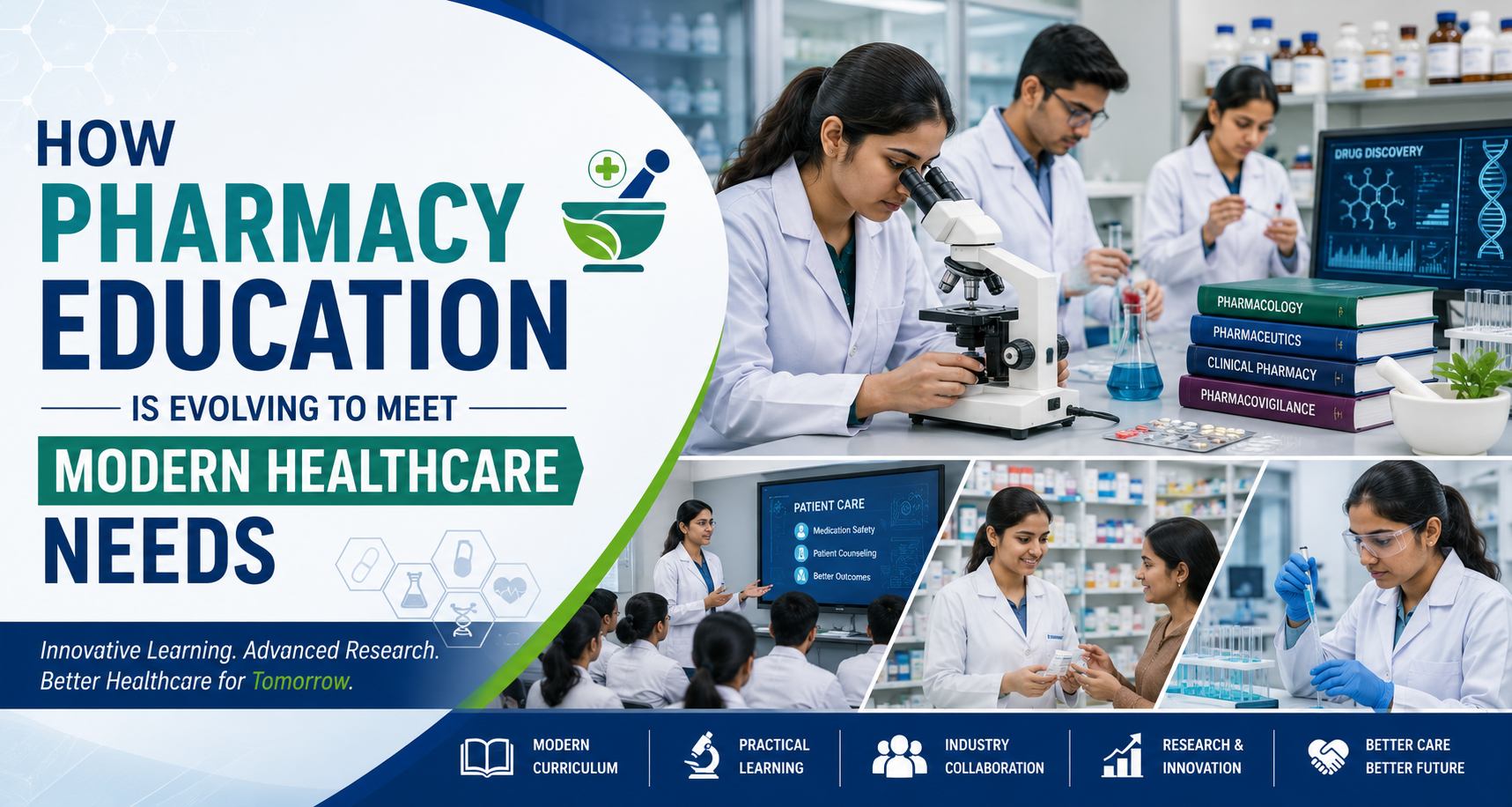
Healthcare systems across the world are changing rapidly. New technologies, evolving patient needs, advanced treatments, and increasing healthcare challenges have significantly transformed the role of healthcare professionals. Pharmacy education is also undergoing major changes to prepare students for these evolving demands.
Today, pharmacy is no longer limited to medicine dispensing. Modern pharmacists contribute actively to patient care, clinical decision-making, research, drug development, healthcare management, and pharmaceutical innovation.
Students looking for a quality pharmacy college in Kolkata, West Bengal increasingly seek institutions that provide practical exposure, industry-oriented learning, and updated academic programs that match current healthcare trends.
Let us understand how pharmacy education is evolving and shaping the future of healthcare.
The Changing Role of Pharmacists in Modern Healthcare
Traditionally, pharmacists focused primarily on dispensing medications prescribed by physicians. However, the modern healthcare environment requires pharmacists to take broader responsibilities.
Today's pharmacists contribute in areas such as:
-
Medication management
-
Patient counseling
-
Drug safety monitoring
-
Clinical research
-
Pharmaceutical manufacturing
-
Healthcare administration
-
Public health awareness
This evolving role requires pharmacy institutions to redesign educational programs accordingly.
Industry-Oriented Curriculum Development
One of the biggest transformations in pharmacy education is curriculum modernization.
Leading institutions and every quality pharmacy college in Kolkata, West Bengal aim to create industry-focused learning environments by incorporating subjects that reflect current healthcare needs.
Modern pharmacy programs now include:
-
Clinical pharmacy
-
Pharmacovigilance
-
Pharmaceutical biotechnology
-
Drug regulatory affairs
-
Healthcare informatics
-
Artificial Intelligence in healthcare
-
Personalized medicine
This updated curriculum ensures students gain knowledge beyond conventional pharmaceutical concepts.
Greater Focus on Practical Learning
Healthcare education cannot rely entirely on theoretical learning.
Modern pharmacy institutions now emphasize practical exposure through:
Laboratory Training
Students learn through:
-
Drug formulation practices
-
Chemical analysis
-
Pharmaceutical experiments
-
Quality testing procedures
Hospital Exposure
Many institutions collaborate with hospitals where students gain direct clinical experience.
Industry Internships
Internships help students understand real-world pharmaceutical operations and workplace environments.
A leading pharmacy college in Kolkata, West Bengal increasingly emphasizes hands-on learning to bridge the gap between academics and practical application.
Integration of Technology in Pharmacy Education
Technology is transforming healthcare systems, and pharmacy education is evolving accordingly.
Modern pharmacy learning environments increasingly incorporate:
Digital Learning Platforms
Students can access:
-
Online learning resources
-
Virtual classrooms
-
Interactive modules
-
E-learning tools
Simulation-Based Training
Virtual simulations allow students to understand patient interactions and clinical scenarios in controlled environments.
Artificial Intelligence Applications
AI tools support:
-
Drug discovery
-
Data analysis
-
Healthcare prediction models
-
Personalized treatment planning
Technology integration prepares students for future healthcare environments.
Research and Innovation Opportunities
Research has become a crucial component of pharmacy education.
Educational institutions encourage students to participate in:
-
Pharmaceutical research projects
-
Drug development studies
-
Clinical trials
-
Scientific publications
-
Innovation programs
Students gain opportunities to explore solutions for healthcare challenges through research-driven learning.
Research exposure also develops critical thinking and analytical abilities.
Strong Industry Collaboration
Modern pharmacy education increasingly depends on partnerships with healthcare and pharmaceutical industries.
Industry collaborations may include:
-
Guest lectures
-
Workshops
-
Industrial visits
-
Internship opportunities
-
Collaborative research projects
A quality pharmacy college in Kolkata, West Bengal often maintains industry relationships that help students understand current market requirements.
Emphasis on Soft Skills and Professional Development
Technical knowledge alone cannot ensure professional success.
Pharmacy institutions increasingly focus on:
Communication Skills
Pharmacists interact regularly with patients, doctors, and healthcare teams.
Students therefore develop:
-
Communication techniques
-
Presentation skills
-
Counseling abilities
Leadership Development
Leadership opportunities emerge through:
-
Student organizations
-
Academic activities
-
Team projects
Ethical Decision-Making
Healthcare professionals must maintain strong ethical standards while serving patients.
Professional development training helps students become responsible practitioners.
Emerging Career Opportunities in Pharmacy
Pharmacy education now supports diverse career paths.
Students graduating from a pharmacy college in Kolkata, West Bengal can explore opportunities in:
-
Pharmaceutical companies
-
Clinical research organizations
-
Hospitals
-
Regulatory agencies
-
Healthcare consulting
-
Drug manufacturing
-
Medical writing
-
Academia
-
Entrepreneurship
The expanding healthcare industry creates multiple opportunities for qualified pharmacy graduates.
Why Pharmacy Education Continues to Grow
Healthcare systems increasingly require skilled pharmaceutical professionals due to:
-
Rising healthcare awareness
-
Growth in pharmaceutical industries
-
Increasing research activities
-
Demand for specialized treatments
-
Technological advancements
Educational institutions continue adapting to these changing requirements.
Conclusion
Pharmacy education has evolved significantly to meet the demands of modern healthcare systems. Today's institutions focus on practical training, research exposure, technological integration, industry collaboration, and skill development to create future-ready professionals.
Students selecting a pharmacy college in Kolkata, West Bengal should consider institutions that provide comprehensive learning experiences aligned with current healthcare trends. The right educational environment can help students build strong careers while contributing meaningfully to healthcare advancement.
FAQs
How is pharmacy education changing today?
Pharmacy education now includes practical learning, technology integration, research opportunities, and industry-focused training.
Why is practical exposure important in pharmacy education?
Practical experience helps students apply theoretical concepts in real healthcare settings.
What career options are available after pharmacy education?
Students can work in pharmaceutical industries, hospitals, research organizations, healthcare consulting, and academia.
Does technology play a role in pharmacy education?
Yes. Digital learning, simulations, AI applications, and healthcare technology are increasingly integrated into pharmacy programs.
Why should students choose a quality pharmacy institution?
A good institution provides strong academic learning, practical exposure, research opportunities, and career development support.